Council pushes for fairer disaster recovery funding reform
Published on 31 August 2026
Gannawarra Shire Council has called on the Federal Government to ensure rural and regional communities are not disadvantaged under proposed changes to the nation’s disaster recovery funding arrangements, lodging a detailed submission to the review of the Disaster Recovery Funding Framework (DRFF).
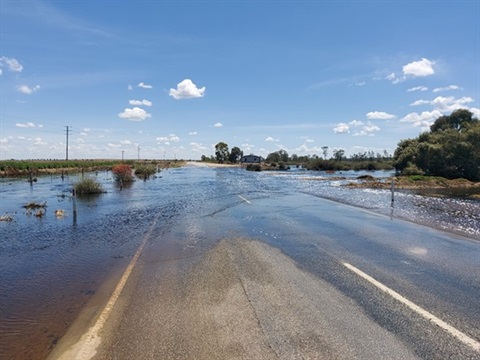
Drawing on the municipality’s experience during the 2022 flood event, which affected approximately 44 per cent of the Gannawarra, Council’s submission supports reforms that simplify disaster recovery funding, improve national consistency and place a greater emphasis on resilience and risk reduction.
The submission highlights several key concerns, including the potential for increased cost shifting to local government, inadequate funding for flood mitigation and resilience projects, barriers facing agricultural communities and the proposed $2.7 million event activation threshold, which Council believes could disadvantage smaller rural municipalities.
Council Chief Executive Officer Geoff Rollinson said the review provided an important opportunity to reshape disaster recovery arrangements to better reflect the realities facing regional communities.
“The 2022 floods demonstrated that recovery extends well beyond repairing roads and infrastructure. Rural communities face long-term social, economic and environmental impacts that can continue for years after the water recedes,” Mr Rollinson said.
Council has strongly supported the proposed shift away from a traditional “like-for-like” reconstruction model, advocating instead for greater investment in projects that reduce future disaster risks and strengthen community resilience.
“If governments are investing in rebuilding after disasters, we should be rebuilding smarter,” Mr Rollinson said.
“Funding should support betterment, flood mitigation and resilience measures that reduce the likelihood and cost of future damage.”
The submission also calls for greater recognition of the challenges faced by rural councils, including prolonged community isolation, damage to agricultural land and infrastructure, workforce shortages and limited access to services.
“A one-size-fits-all approach does not work for rural Australia,” Mr Rollinson said.
“Funding frameworks must recognise the unique pressures experienced by regional communities and ensure smaller councils are not left carrying an unfair financial burden.”
Council is also advocating for increased investment in local government emergency management capability, community recovery programs and long-term risk reduction initiatives.
“Local government is on the frontline before, during and after emergencies. A stronger partnership between all levels of government, backed by sustainable funding, will help communities recover faster and become more resilient to future disasters,” Mr Rollinson said.
Council’s submission has been provided to the Australian Government as part of the national consultation process on the proposed Disaster Recovery Funding Framework.
To view Council’s submission, click on the Advocacy heading at www.gsc.vic.gov.au/documents
TOP: Flooding of Wandella Creek resulted in the closure of the Murray Valley Highway near Reedy Lake in October 2022.